Vibe Code for the Planet.
Sponsor the next generation building Agents for the environment. A one-day hackathon: Vibe Code for the Planet.
 More coming
A day where students, sponsors, and Bay Area community partners ship real environmental software together.
A day, sized to the Bay Area.
Put your platform
in the hands of
builders.
ProgramEarth turns APIs, AI tools, cloud credits, and open-source frameworks into environmental use cases that builders ship, agencies evaluate, and your teams reuse. Sponsor one event or a multi-market series across Oakland, New York City, and Washington, DC.
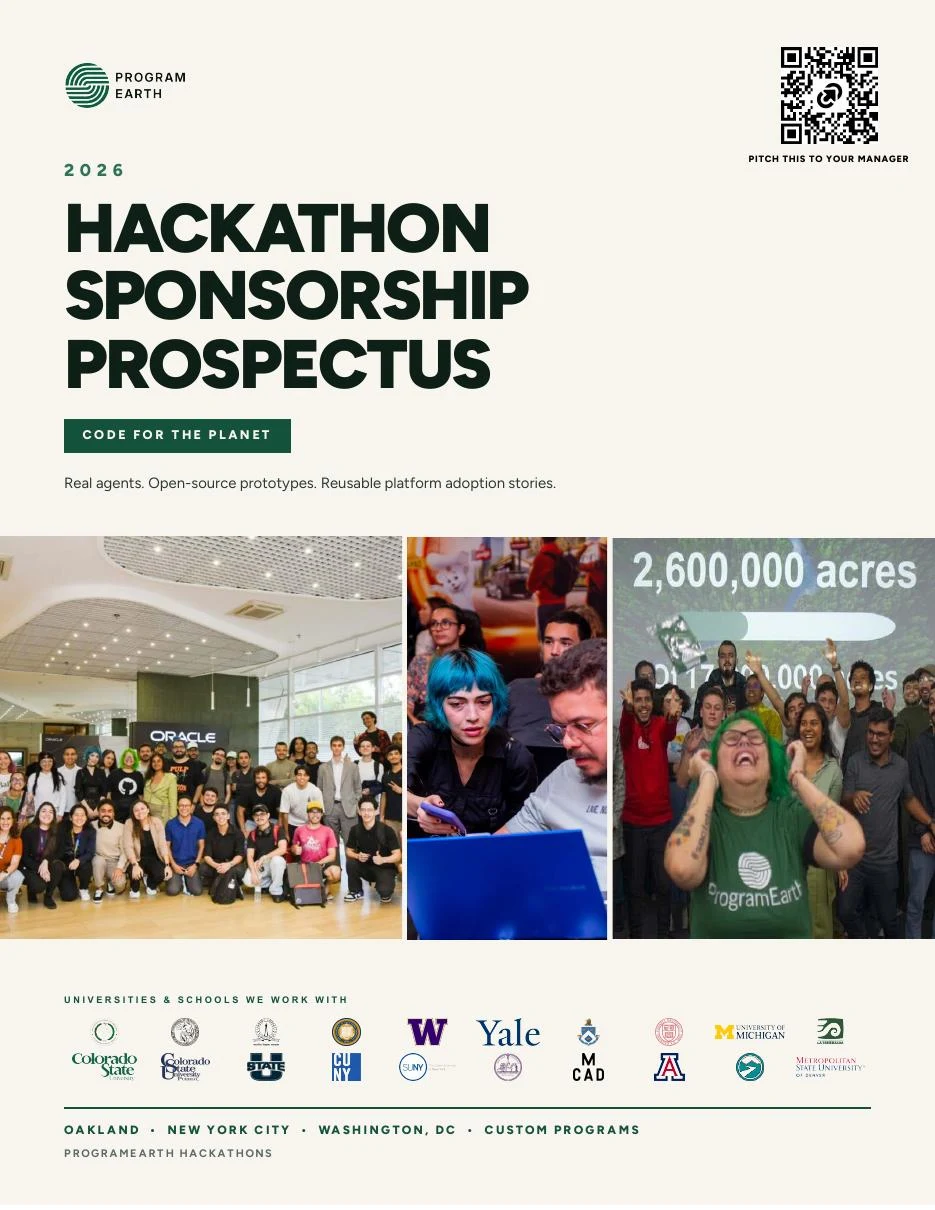
0+ students served across 0 countries and 0+ participating organizations.
Sponsors define. Students build. Agencies keep it running.
You choose the environmental use case. We provide the context.
- Provide APIs, AI tools, cloud credits, or environmental workflows.
- We connect your technology to real public datasets and agency needs.
- Your platform is used by future engineers building solutions for Oakland and the Bay Area.
Recruit future talent. Demonstrate impact. Drive innovation in the public good.
Students from local colleges and community organizations build prototypes using your tools.
- AI agents for environmental risk management and decision support.
- Water quality and watershed monitoring.
- Large environmental database pipelines.
- Geospatial, sensor, and remote-sensing workflows.
- Public-sector reporting and decision-support systems.
Real datasets. Real workflows. Real impact.
Top projects don't end on demo day. They continue in the real world.
- Agency partners evaluate and adopt useful tools.
- Open-source code, models, and workflows are retained by agencies.
- Tools support environmental monitoring, compliance, and community resilience.
- Students gain mentorship and pathways for future collaborations.
Tools built by students. Deployed for our communities. Built to last.
Four tracks, one day.
Environmental GIS
- Map, analyze, and protect land, water, and community resources.
AI Agents
- Build agents for environmental workflows, monitoring, and decision support.
Secure Open-Source Infrastructure
- Create secure, scalable public-interest tools and deployment systems.
CI/CD, APIs & Data Pipelines
- Connect tools, automate workflows, and move data into action.
Working tools by 5pm, not slide decks.
Teams ship a functioning, agent-powered tool against a real environmental workflow in a single day, built on your APIs, SDKs, and datasets.
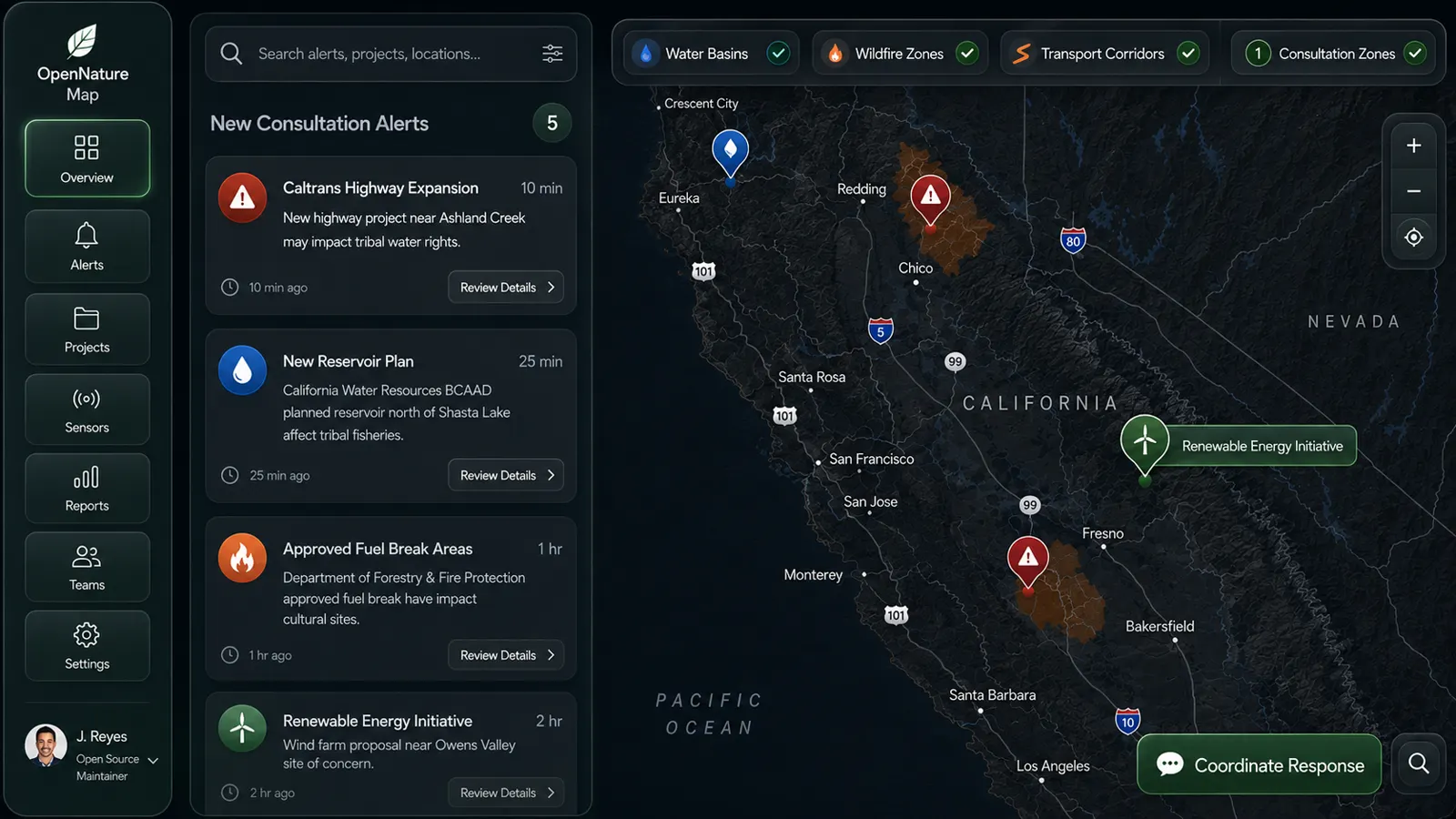
A demoable repo, same day
Every team ships a working prototype and a public repository, not a concept deck. You leave with something you can run.
Built on your stack
Sponsors define the challenge. Your API, SDK, or dataset becomes the reference implementation students learn on and keep using.
Validated by real users
Agency and community partners sit with the teams, so the workflows are pressure-tested by the people who actually run them.
Output that keeps circulating
Repos, demos, and badges travel with students to LinkedIn and their next roles, extending your reach well past the event.
Tier 3 sponsors get to issue custom badges.
Each custom badge links students back to your repository, helping more builders discover your tools, understand what you offer, and start building with them.
 ProgramEarth
October 25, 2026.
Universities and Community Organizations.

October 25, 2026. BayWorks, Oakland.
Whether you're bringing a team, a budget, or a challenge, get in touch and we'll route you to the right side of the room.
Part of Vibe Code for the Planet 2026
Building AI agents for the environment · Bay Area talent · Public good
Three ways to support Vibe Code for the Planet.
- Logo on website & materials.
- LinkedIn mentions.
- Event giveaways.
- Event recap posts.
- Sponsor listing.
- Access to talent pipeline.
- Reference architecture (basic).
- All Tier 1 benefits.
- Co-branded swag.
- Issue credentials for your tool (AWS Strands / AI Builder).
- Access to reference architecture repo used for customers and organizations.
- Enhanced visibility & mentions.
- Mentor participation opportunities.
- All Tier 1–2 benefits.
- Branded recap video.
- Impact metrics report.
- Co-branded case study.
- Advanced reference architecture.
- We maintain reference architecture.
- Strategic visibility & ecosystem collaboration.