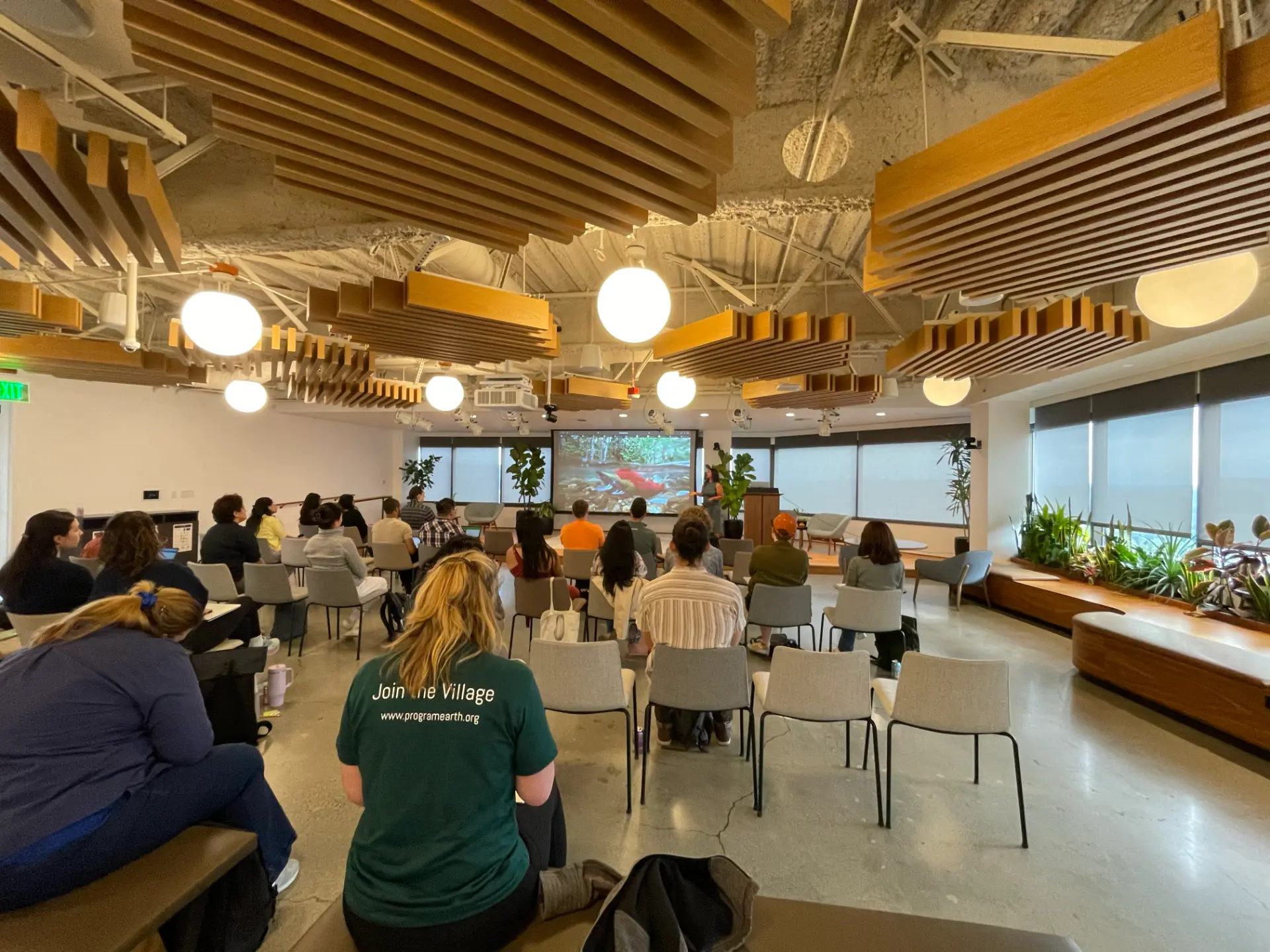
Build real tools for the green economy.
Code for the Planet is a one-day hackathon series where students build with agentic AI, GIS, environmental data, and Arduino-based hardware to tackle real climate and conservation challenges.
Three technical tracks, one shared mission.
Data visualization
Dashboards and public-facing tools that turn field data into decisions partners can act on.
Hardware & GIS data
Sensor pipelines, spatial datasets, and map layers for reforestation, wildlife, and watershed work.
Data training pipelines
AI/ML workflows that classify species, imagery, and satellite scenes for conservation partners.
of participants secure a role, internship, fellowship, or paid technical opportunity within three months of completing a project pathway.
Green jobs are becoming technical jobs.
- 24M
- U.S. green jobs projected by 2030
- 31,300
- projected GIS openings from 2024–2034
- 78M
- net new jobs globally by 2030
Code for the Planet helps students build the stack behind those roles: agentic AI, GIS, environmental data, and field hardware.
From environmental agencies to Fortune 500 engineering teams.






What happens at a hackathon
One day. Real tools. Real environmental challenges.
- 01
Present conservation projects
Students start with five challenges in water, land, biodiversity, climate resilience, and community-led conservation.
- 02
Choose what you'll build
Pick your technical track and go deep with mentors from environmental partners.
- Agentic AI · copilots, workflows, research agents
- GIS + Environmental Data · maps, dashboards, watershed tools
- Hardware · Arduino sensors, field monitoring, data pipelines
- 03
Pick teams and hack
Join a team around the project you care about and build with AI agents, real datasets, and real use cases.
- 04
Ship demos and prizes
Submit a working prototype. Pitch to reps and receive feedback. Prizes reward completion, accessibility, and impact.
Upcoming Code for the Planet Hackathons
Vibe Code for the Planet
Build tools for local climate resilience, environmental monitoring, and community-led conservation.

NYC Environmental Agent-a-thon
Students build AI agents for public-sector environmental data alongside sponsors and NY State agencies.

DC AI Week
Build responsible AI tools for public-sector and environmental challenges.
What we've shipped
“I'm beyond blessed and excited to share that I landed my first role in tech at HiBob. I'm grateful to everyone who supported me along the way, especially the mentors, meetups, and communities like ProgramEarth that helped me get here.”
A student shared how ProgramEarth helped shape their path into a first tech role.

“When I first explored data visualization, I was lucky to learn through organizations like DataKind and ProgramEarth, which consider both the ethics and scale of technology when solving real-world challenges.”
A participant described how they first connected data visualization to real-world impact.

“Proud to share my ProgramEquity achievement badge. The program gave me hands-on experience collaborating with a software team and introduced me to AI, API management, and cybersecurity. I strongly recommend it to juniors seeking practical experience.”
A participant highlighted a ProgramEarth-issued credential on their professional profile.

Want to prepare before the hackathon?
Open Earth Academy is built to help you succeed, a self-paced path through the exact stack you'll use on hackathon day.
Start the 12-week course →- →12-week self-paced course
- →Agentic AI workflows
- →GIS + environmental data
- →Arduino-based hardware labs
- →Optional university microcredential